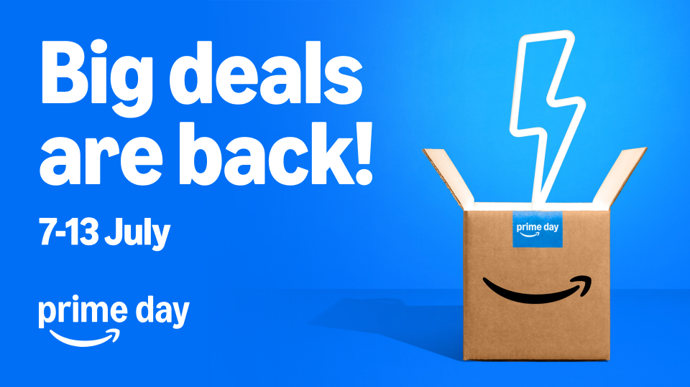
Amazon Prime Day 2026 is just around the corner. Running from Monday 7 July to Sunday 13 July, Aussie brands have a full seven days to drive new customers, boost organic rank, and build real momentum on Amazon. But the brands that win Prime Day aren’t the ones scrambling the week before. They’re the ones who’ve already done the groundwork.
Here’s how to make the most of it.
Why Prime Day Still Matters for Australian Brands
Prime Day isn’t just a discount event anymore. It’s one of the biggest brand discovery moments on the Amazon calendar, and the data backs that up. Pattern’s 2026 Consumer Marketplace Report found that 56% of Australian shoppers bought a product on Amazon they’d never considered before, and almost half of them visited a brand’s website after discovering it on Amazon first.
The opportunity in 2026 is just as significant. With a seven-day window again this year, there’s more runway than a traditional sale event, but also more complexity to manage. Brands that show up with the right deals, the right ads, and clean listings will capture new customers who could be buying from them for years.
That’s the mindset shift worth making: Prime Day isn’t a clearance event. It’s a brand-building moment.
Phase 1: The Lead-Up (The Work That Happens Before Day One)
The best Prime Day results don’t start on the day itself. They start two weeks before, which means the window to act is now.
Listing integrity is non-negotiable. Any known listing issues, whether that’s suppression, a lost Buy Box, incorrect pricing, or content gaps, need to be resolved before Prime Day kicks off. Once the event is live, making changes to listings carries real suppression risk. Audit everything beforehand and leave the listings alone once deals go live.
Your promoted products need full ad coverage. Every ASIN that has a deal running should have Sponsored Products, Sponsored Brands, and Sponsored Brand Video campaigns behind it. Don’t leave promoted products without ad support and expect the deal badge to do the heavy lifting.
Set your ad budgets before the event, not during it. Traffic spikes dramatically on Prime Day, and campaigns can exhaust their daily budgets before the afternoon is out. Budget flights should be set in advance, with room to scale. You can always pull back, but you can’t recover lost visibility.
Phase 2: During Prime Day (July 7-13)
This is execution mode. The goal is to stay on top of your campaigns and deals without making reactive changes that create more problems than they solve.
Check your campaigns every one to two hours. The key things to watch: Are promoted ASINs in budget? Has any listing been suppressed? Have you lost the Buy Box on a key product? These are the issues that kill Prime Day performance and they can appear and disappear quickly. Frequent checks let you catch them early.
Protect your branded search terms. During peak hours, competitors will often increase bids against your brand keywords. Branded keyword defence should be active throughout the event, particularly in the mornings and evenings when traffic is highest.
Use DSP retargeting to capture mid-funnel intent. Shoppers who view your product detail pages during Prime Day are highly qualified. Retargeting these product viewers, as well as cart abandoners, with a second touchpoint can meaningfully lift conversion. PDP views during the event will often exceed the threshold required to build meaningful retargeting audiences.
Walk the virtual aisle regularly. Search your top keywords two to four times a day and take screenshots of your placements and your competitors. This gives you a live read on where you’re showing up and whether your bids are working.
Scale spend on what’s performing. If a promoted product is converting, 2x to 3x daily spend is a reasonable approach. Shift budget away from upper-funnel awareness campaigns during the event itself and focus on conversion. You can rebuild the funnel in the lead-out phase.
Don’t make listing changes mid-event without clear justification. The suppression risk is real. If something isn’t working, the answer is rarely a listing edit during the event itself.
Phase 3: The Lead-Out (July 14 Onwards)
Prime Day ending doesn’t mean the work stops. The lead-out phase is where brands either capitalise on the momentum or leave value on the table.
Retarget the new audience you just built. The shoppers who browsed your products but didn’t convert during Prime Day are now a warm audience. Narrow your DSP retargeting to product detail page viewers from the Prime window specifically and re-engage them with a follow-up message.
Re-engage new-to-brand customers. Prime Day typically drives a spike in NTB (new-to-brand) customers. The lead-out period is the right time to nurture that relationship before those customers drift. DSP remarketing to buyers acquired during the event can support repeat purchase rates.
Reset your ad strategy gradually. Don’t slam the brakes on spend the day after Prime ends. Wind down budgets steadily over the lead-out week and reset bid optimisations and return-on-ad-spend targets progressively.
Block time for a proper post-mortem. The instinct is to move on quickly, but a structured review one to two weeks after Prime Day is genuinely valuable. Look at new-to-brand customer volume, organic rank changes, ad performance by deal type, and what your top and bottom performing ASINs had in common. Those learnings are your competitive advantage for the next event.
The Mindset That Wins Prime Day
The brands that get the most out of Prime Day aren’t necessarily the ones with the biggest discounts. They’re the ones that show up prepared, stay disciplined during execution, and follow through after the event ends.
Prime Day 2026 runs 7 to 13 July. There’s still time to prepare, but the window is closing.
At Pattern, we work alongside Australian brands on their Amazon strategy year-round, not just at peak moments. If you want to talk through how to get more out of Amazon, get in touch.