In 2026, the digital content race isn’t just about outranking competitors on Google – it’s about showing up wherever and however customers search for answers. And search itself is changing fast.
AI-powered platforms – like Google’s AI Overviews, ChatGPT’s browsing mode, and emerging conversational search engines – are quickly becoming the new front doors to the internet. Recent research shows 56% of consumers now use AI tools (auDA, 2025), and nearly half have used generative AI in the past year (Ipsos for Google).
According to Pattern’s 2026 Marketplace Consumer Report, 32% of consumers surveyed admitted to using Search AI Overview, ChatGPT or similar AI assistant to research a product in the past 12 months. Moreover, 45% have trust in AI generated recommendations when deciding what to buy.
The takeaway? Content that stands out – trusted not just by people, but by AIs – is fast becoming the difference between brands that ride out change and brands that shape their category. Here’s why long-form copy is your advantage in 2026.
What is long-form copy?
Long-form copy is in-depth written content designed to explore a topic thoroughly, answer questions, and provide real value to readers. Unlike short posts or bite-size updates, long-form content typically runs 1,500-4,000 words (or more), offering greater detail, context, and expertise.
Examples of long-form copy include:
- Comprehensive blog posts and industry articles
- How-to guides and instructional resources
- Style guides and brand playbooks
- Whitepapers, research reports, and case studies
- E-books and ultimate guides
This type of content not only informs and educates your audience – it’s also tailor-made for AI and search engines that reward depth, trustworthiness, and authority.
The New Search Frontier: AI as the Gatekeeper
Google has already embedded generative AI into Search in Australia – AI Overviews rolled out nationwide in 2024 (Google Australia, 2024), and AI Mode launched in 2025. As AI-native search grows, queries are getting longer and more complex – Google says early AI Mode testers ask queries nearly three times the length of traditional searches (Google Australia, 2025).
Contrast this with thin product pages or surface-level blogs. These pages risk being left behind, bypassed by AI engines seeking real explanations, original insights, and evidence of brand authority.
The takeaway: long-form copy helps your site get cited not just by humans, but by the AIs shaping tomorrow’s shopping journeys.
Long-form = Topical Authority (and Resilience)
Remember Google’s relentless algorithm updates?
In 2025, “topical authority” became the make-or-break metric for stable search performance. Brands producing comprehensive, in-depth guides and thought leadership pieces see more stable rankings and less volatility – because Google and AI systems recognise them as trustworthy sources.
When your content covers a topic from multiple angles, addresses common (and uncommon) questions, and provides genuine expertise, you signal E-E-A-T: experience, expertise, authoritativeness, and trustworthiness – these “E-E-A-T signals” fuel both human trust and algorithmic favour.
Data speaks for itself: The right word count depends on the type of page, but the trend is clear: in-depth content gets noticed – by both humans and search engines. On a blog, long-form articles give space to explore topics fully, build trust, and encourage real engagement. For collection or category pages, adding thoughtful guides, FAQs, and supporting details can help both users and algorithms.
And the numbers back it up:
- Average word count for top results: Pages ranking on Google’s first page often feature in-depth content. Top-performing blog posts average between 1,500 and 2,500 words, while long-form articles in the top search results typically range from 1,300 to 3,000 words, depending on content type and search intent. (Search Engine Land, 2025).
High-performing brands use this insight to prioritise depth and substance, knowing that shallow content rarely achieves lasting visibility.
- Increased traffic: Long-form blog posts (over 3,000 words) get 138% more page views on average than posts with fewer than 500 words (The State of Content Marketing Global Report by Semrush, 2022).
Short-form posts might get initial clicks, but they rarely deliver lasting traffic or help capture the full audience searching for answers.
- More backlinks: Comprehensive long-form articles – typically over 2,500 words – attract about 77% more backlinks than shorter content, building organic authority that can significantly boost search rankings (Search Engine Land, 2025).
If you’re chasing authority, long-form consistently earns more links, while brief posts struggle to get picked up or referenced by others. - Higher engagement and shares: In one study, 78% of articles with fewer than 500 words weren’t shared at all. This shows that short content often fails to spark engagement, while longer, more comprehensive posts are far more likely to be shared and valued by readers – boosting both visibility and dwell time. (The State of Content Marketing Global Report by Semrush, 2022)
In the long run, people engage with content that provides answers and substance – while surface-level posts get scrolled past and forgotten.
- Lead generation: Long-form content isn’t just good for search – it delivers real business impact. Detailed content welcomes users early in their research journey, builds trust, and guides prospects through the funnel, rather than losing them to competing sites.
Long-form, when tailored to your page type and audience, isn’t about adding fluff – it’s about giving both people and AI a reason to stick around, share, and come back for more.
From Blog to Everywhere: Repurposing Power
Think of long-form as the engine room for your entire content ship. A single in-depth article can be sliced into social snippets, customer emails, FAQs, product guides, and so much more. This not only boosts your efficiency but also ensures a cohesive, on-brand presence across every channel.
Getting Into “AI Mode”: Four Practical Steps
- Write for humans, optimise for AI: Structure articles with clear headings, rich detail, and FAQ sections. Make it easy for both people and algorithms to scan and extract value.
- Embrace Q&A and conversational formats: Google and large language models are answer engines – built to respond to real user queries. Writing content in a clear question-and-answer style that mirrors real search intent helps your pages get featured and cited by AI tools.
- Cite your sources: Just as AIs favour trustworthy content, they prefer cited data, original research, and expert opinions. Elevate your content’s “AI-readiness” by referencing reputable sources.
- Encourage engagement: The best long-form copy isn’t a data dump. Use compelling stories, clear visuals, and actionable takeaways to keep real readers hooked – driving up engagement metrics that algorithms love.
Key Takeaways
- Reframe content as a long-term strategic asset that can be refreshed over time, not a short-term campaign.
- Prioritise depth and authority: Thin, one-off posts won’t move the needle in an AI-first world. Invest in comprehensive guides, topic clusters, and resources your audience is already searching for.
- Think “AI readiness”: Every piece of content is now a candidate for AI citation and summarisation. Structure content clearly, answer common questions, and back up claims with credible sources – so AI finds, trusts, and references you.
- Measure beyond clicks: Focus on engagement, shares, backlinks, dwell time, and leads generated – not just publish-and-forget.
In a world where “search” means “let me ask AI,” prioritising long-form isn’t just about SEO – it’s a play for relevance, authority, and sustained lead generation.
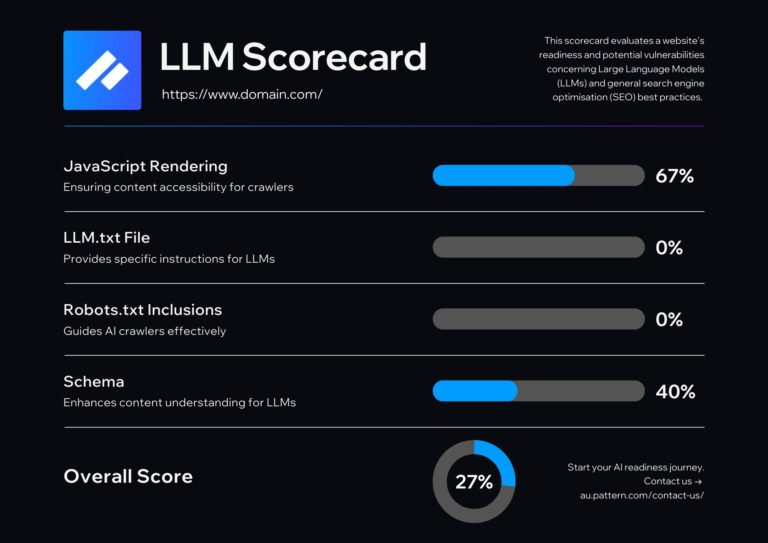
There is a need to audit your existing content, identify where you fall short of what AI and modern users expect, and make a plan for strategic investments in long-form assets that serve as the backbone of your digital brand.
Grow Your Brand with Pattern
At Pattern, we’re more than just content creators. Pattern partners with brands to understand their audience, goals, and competitive landscape. We bring proven expertise in building content that dominates classic search, feeds AI tools, and drives real business outcomes.
Ready to shift from quick wins to category leadership? Contact us to plan your next chapter.